
Airfield development starts with a feasibility study
Can your airfield earn more and depend less on public money? Dutch Houses maps the development options, the investment and the new revenue for your airfield, and turns them into a phased plan.
For owners, operators and municipalities · English or Dutch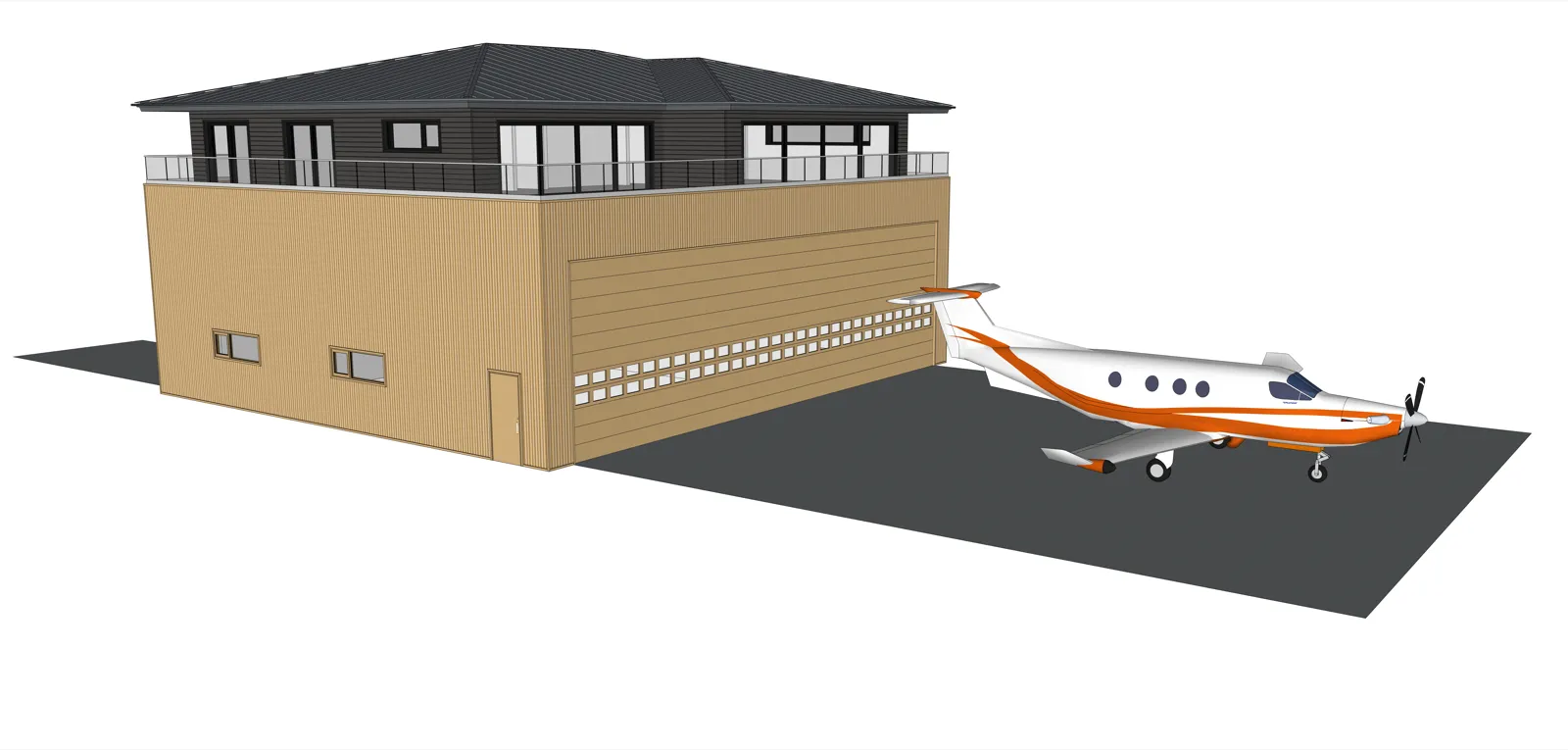
Six areas that decide if your airfield can grow
We look at the site, the regional demand, the operation and the planning rules. Before we start, we agree which areas apply to your airfield and how deep each one goes.
Location and layout
Available land, position and room to develop. Runway and taxiway layout, building density and possible changes.
Aviation and safety
Relevant starting points from ICAO Annex 14, aircraft categories, noise and safety, for today and for the use you want.
Local rules and HOA
The zoning or local plan and, where it applies, the homeowners association rules. What is possible, what is not, and the next steps.
Market and revenue
Regional demand, activities that fit and extra revenue, turned into development and operating scenarios. Where relevant, scheduled routes and city pairs.
Organisation and phasing
A multi-year plan with the people, functions and responsibilities you need, and the order of the actions.
Visibility and activities
A promotion and social media plan and an activities plan that fit the target group and the position you want.
Fifty minutes on the future of your airfield.
Before you commission a study, talk to the pilot who develops the hangar house project at Drachten Airport. In 50 minutes we look at your airfield, your goals and the first questions a feasibility study must answer.
- 01SituationYour airfield today: land, runway, users, costs and who decides.
- 02GoalsLess dependence on subsidies, extra revenue, or a plan for land that lies unused.
- 03OptionsWhich functions could fit, from hangars and studios to a flight school or an FBO.
- 04Next stepWhether a study makes sense now, and which scope fits your question.
50 min
- Length
- 50 minutes
- Where
- Microsoft Teams video
- When
- Mon–Fri, 19:00–23:00 CET
- Language
- English or Dutch
- With
- Sjoerd-Jan van Klaarbergen, pilot
We confirm your time by email. You pay in advance, then receive the Teams link.
From an operating question to a general aviation airfield business plan
When landing fees and fuel sales do not cover the runway, the buildings and the staff, someone fills the gap: a municipality, a club or a single owner. Other airfields have land to spare but no concrete plan for it. Both questions call for the same thing: a business plan built on facts about your own airfield.
An airfield feasibility study brings the starting point, the ambitions and the development options together. The goal is a clear course for your airfield: concrete chances for new revenue, the investment they need, and a step-by-step plan toward realisation.
What you get
- Feasibility analysis and development scenarios, based on the location, regional demand, operational options and planning rules.
- An indicative budget and operation: income, costs and investment, with the assumptions, dependencies and risks written out.
- A multi-year plan and advice: a phased plan with the functions, responsibilities, activities and promotion it needs.
Budgets and scenarios are indicative. Where needed, specialist checks or calculations come on top. The outcomes are the basis for your next decision, not a decision in themselves.
One building, more than one use
A multifunctional hangar house can be part of the scenarios. The hangar on the ground floor and the space above can serve many uses: studios for rent with hangar space, a flight school or simulator training, offices, a maintenance workshop, aircraft detailing, a pilot shop, a skydiving or drone school, or an FBO. Hangar homes, the model you find at US airparks, are one option among these.
Hangar homes at an airfield can add revenue in more than one way: ground lease or lot sales, extra flight movements, and more customers for the other businesses on the field. Each of these is a line in the scenarios, with its own assumptions.
Which functions make sense depends on local demand, the space you have and what the plan allows. We work out how each one could add revenue. When the outcome is promising, we can continue together with design, local consultation and project development.
Scope, agreed in the proposal
Not every airfield needs every part. The study comes in three scope options: online, live and in depth. The price is calculated per airfield, based on its size and potential: a study for a regional airport costs more than one for a small airfield. Which scope fits, and its cost and planning, we agree in the proposal before any paid work starts.
From sign-up to a study assignment
Sign up your airfield
Tell us where your airfield is, your role and the question you want answered.
Start hereFirst meeting
A free first meeting about your situation, your goals and the information you have.
Proposal
A study proposal with scope, cost and planning. The paid study starts only after your agreement.
Study and advice
Dutch Houses carries out the study and discusses the outcomes with you. Then you decide.
How Drachten went from initiative to council decision
Drachten Airport in Friesland shows the path an airfield can take. Dutch Houses plans 38 hangar house lots there, 37 of them available.
| When | Milestone |
|---|---|
| End of 2020 | Local entrepreneurs start plans for a more financially independent airfield. |
| 10 May 2022 | The council adopts a vision for the future: keep the airfield and research its development. |
| Sep 2022 – Jun 2023 | Research into development plans, organisation and financial options. |
| 1 Feb 2023 | Dutch Houses presents the hangar house plans to about 100 local residents. |
| 23 Jun 2023 | Final report on the chances, financial starting points and next steps. |
| 14 Nov 2023 | Council decision: green light for the further development of the airfield. |
Permits, land agreements and the final project agreements follow as separate steps. This timeline shows the preparation, not the current permit or building status.

Hangar space below, four studios above
The DH 4 Studio is a Piston hangar house with four studios on the upper floor. An airfield can use it for short stays for visiting pilots, for offices or for classrooms.
It is one example of how a single building can add rental income and flight movements at the same time.
What does the airfield strategy call cost?
The call costs €149 incl. VAT and takes 50 minutes. It is a video call (Microsoft Teams) with Sjoerd-Jan van Klaarbergen, pilot and CEO of Dutch Houses, in English or Dutch, Monday to Friday between 19:00 and 23:00 Dutch time (CET). You send the form, Sjoerd-Jan confirms a time by email, you pay in advance via a payment link, and then you receive the Teams link. It is the fastest way to test your question before you commission a study.
Who is the feasibility study for?
For airfield owners, operators, municipalities and representatives of airparks who want to explore development options and new revenue.
What does the airfield feasibility study cost?
The price is calculated per airfield, based on its size and potential: a study for a regional airport costs more than one for a small airfield. After the first meeting you get a proposal; scope, cost and planning are fixed before you give the assignment.
Does land need to be available already?
No. You can sign up when that is still unclear. We first discuss the situation and decide together whether a study makes sense now.
Must the outcome be a hangar house project?
No. We research if and under which conditions a development has a future. Hangar homes at the airfield can be one option; the site and the outcomes decide the next step.
Do you work outside the Netherlands?
Yes. Dutch Houses works with sales agents, local builders and project developers in Europe and with partners in the United States.
Tell us where you want to land.
Tell us the name of your airfield, its ICAO code and your role. Only your name and email are required. This is not yet an assignment for a paid study.